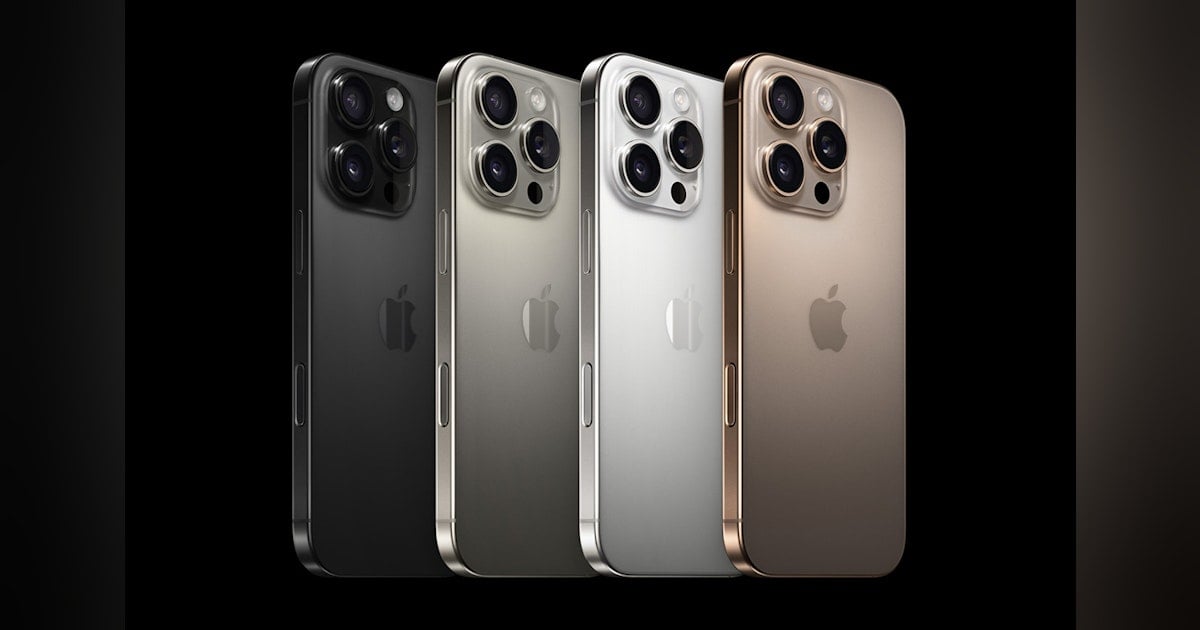

Apple unveiled the new iPhone 16 family on September 9, 2024. They had a very powerful and exciting accessibility story. But it was not related to the phones, but the currently available AirPods Pro 2. There is also not much accessibility news to report for the incoming iOS 18. Excitement for the new iPhones is mostly concentrated around the camera and Apple Intelligence.
The blind and low-vision community has mostly standardized on iPhone as their mobile of choice because of accessibility features such as VoiceOver which is standard on every iPhone sold around the world. Because it is on every iPhone regardless of price and specs, it is not a differentiating factor for deciding which iPhone to purchase. With no standout accessibility story for iPhone 16, we have to work a little to determine which is right for you. First, a look at the new lineup:
iPhone 16 family
From the bottom to the top of the range, we have the following:
- iPhone 16
- iPhone 16 Plus
- iPhone 16 Pro
- iPhone 16 Pro Max
iPhone 16 is the standard iPhone and the choice for most people buying a new phone. It is the flagship offering at $799. The Plus model is the same phone, but bigger. Besides having a larger screen, it carries a larger battery which is an important consideration for heavy users of accessibility features.
For blind users, the smaller screen size might work because the size of elements on the screen is of no concern. You just need enough room on the screen for finger gestures. However, low-vision users will likely want the biggest screen possible so that they can enlarge the size of the text and other elements to the max.
Even that might not be the deciding factor because in many cases, the largest text size is still too small. You can enlarge the size of things on the smaller phone as well. You just won’t be able to have as much on the screen at the same time. If you go smaller, expect to do more scrolling. Also, tap targets will be slightly smaller. If you can work with that, you might want to go with the smaller phone for the reduction in size and weight. The difference is substantial.
Advantages on the Pro side of the equation include a higher refresh rate, more and better camera lenses, more power for power-hungry tasks, and longer battery stamina per charge. These features can have a dramatic impact on accessibility performance. Here is a closer look at some of the Pro advantages:
Reasons to go Pro
The higher refresh rate might go unnoticed by people with low vision. But every little bit of clarity and smoothness add to readability and eye strain reduction. If you are holding your phone close to your face a lot, the 120 Hz screen will improve your experience whether or not you can always see the difference. Your eyes will thank you.
Pro phones usually run brighter than standard models. The brighter the screen, the easier it is to see what is being displayed. For people with low vision, as a general rule, brighter is better. This is especially true if you find yourself looking at your screen outside. The brighter your display, the more visible it is when you are outside.
One more note about screen size: this year, the Pro phones are larger than the standard phones by an amount that will be noticeable. The small Pro is a little larger than the small standard. The same is true for the big phones. So regardless of the size class you go with, the Pro version is going to be a little larger and provide you just a bit more screen real estate than ever before.
Cameras are not always the most important consideration for people with low vision or no vision. But I believe it is an important consideration for both. If you take photos of people and events in your life, you need photos with the highest fidelity you can get. I often find myself taking pictures of things just so I can zoom into the image and see a clearer version of it on my screen than I could see in nature. In those cases, I want all the detail I can get. I never saw the hair on the body of an insect until I had a phone camera that could bring out those details.
Another major use for the camera is magnification. The magnifier app is a subset of functions that are powered by the system camera. You might not need to zoom in to an extreme amount when taking photos. But as a digital magnifier, you want the camera to zoom in as much as possible. The standard iPhones have a 2X optical zoom lens with anything higher being digital. The pro phones have a 5X optical zoom lens that is significantly better than anything the smaller phones have. If you are relying on your phone as a digital magnifier, the Pro phones are highly recommended.
Power is also a major consideration for people who use a lot of accessibility features. Many people say they never actually push these amazing devices to their limits. But you are getting very close to doing just that if you are a heavy user of the accessibility accommodations. It makes even more sense to get the most powerful phone if you plan to keep it for two o more years. You don’t want to be left out of new features, or find that your phones starts to feel sluggish after the first year or so.
Apple Intelligence
While I have been on the betas since day one, I will withhold my review of the software for another post. But I will say that while Apple Intelligence is not ready for prime time and won’t even be available on the new phones until weeks after launch, it should be a major factor in your choice for an accessible iPhone this year.
This is the one exception to the rule that one should never buy hardware today based on software promises of tomorrow. In this case, you absolutely should do just that. Every iPhone purchaser last year who bought anything other than an iPhone 15 Pro is completely out of luck and will not get any of the Apple Intelligence features on their device. That is a bitter pill to swallow.
Further, there is an excellent chance we haven’t even heard of all the new features in store. So whatever you think is coming needs to leave room for a few surprises. We already had a major surprise announced at the iPhone 16 event. It is no longer safe to buy the minimum viable iPhone. Sure, all of the new iPhones can run Apple Intelligence. But do you really want to take a chance on missing out on some exciting new feature next year that your base model iPhone will not be able to run? I feel pretty confident that at the rate of catching up that Apple has to do with regard to AI, some new features are going to leave today’s basic models behind. This is probably the single biggest reason to go for a Pro model this time around.
I believe that Apple Intelligence will be a boon for accessibility in a number of ways. Here are just a few off the top of my head:
- When you can’t figure out how to perform a task on your phone, you will no longer have to dig through uninformative manuals or call for help. Siri will be able to walk you through any task on the phone and save you time and frustration.
- You will be more aware of businesses you walk past with just a press and hold of the new Camera Control button. Even if you can’t see the name of the business, the phone will be able to surface information about that business. As an example, it will provide you with hours and a menu if it is a restaurant. That is a game-changer for many of us.
- Those of us with low vision cannot always see what we are typing. That means we miss a lot of typos. The new text-handling features such as proofreading will help us deliver cleaner copy by catching the mistakes we visually miss.
- If photos are a big part of your life, you will already know how challenging it can be to find a particular photo, or set of photos. Apple Intelligence will allow you to use natural language to describe the photos you want it to show you. It also works in video, allowing you to describe a moment in a video you would like to see. That’s a really big deal.
There is more to Apple Intelligence than those features. It is important to reiterate that none of this will be available initially. Most of this will become available in an October update. Even then, the features will be marked as betas. And none of that matters because more features like this will be incoming over the course of the next few months. If you don’t have a device that can drive them well, you will regret your purchase before your next buying cycle.
Recommendations
There is no such thing as the best phone. The worst iPhone 16 in the lineup is still a great device. It can only be a question of what is the best phone for you in this buying cycle. At the end of the day, you are the only one who can decide that.
I can tell you that for this low vision iPhone buyer, it is going to be iPhone 16 Pro with no other options. I upgrade every year because my cellular plan allows it. That means I never really have to worry about being left behind by any new capabilities.
The screen is brighter. The battery is improved. The power and specs are maximized and ready for whatever comes next. The camera has a 5X lens for optimal magnification. The speakers make listening to spoken word content and text to speech enhancements easy to hear. The screen size is sufficient while the device is still small enough to fit into a shirt pocket.
I optimize for accessibility over budget. I buy tech that helps me live my blind life better. The major carriers will give you a free phone with the right contract. So these phones are not out of reach for most people. If you haven’t pre-ordered by now, expect long wait times as many models are already sold out as of this writing. Sell outs started just minutes after pre-orders opened.
Your best path to a day-one iPhone 16 is to head to the nearest Apple Store on September 20th. That might be the perfect time to call in some of that paid leave time you have been accumulating.
David Johnson
For those who would like more advice or information about the new tech, see David Johnson at MIB in the office, or email him at djohnson@msblind.org