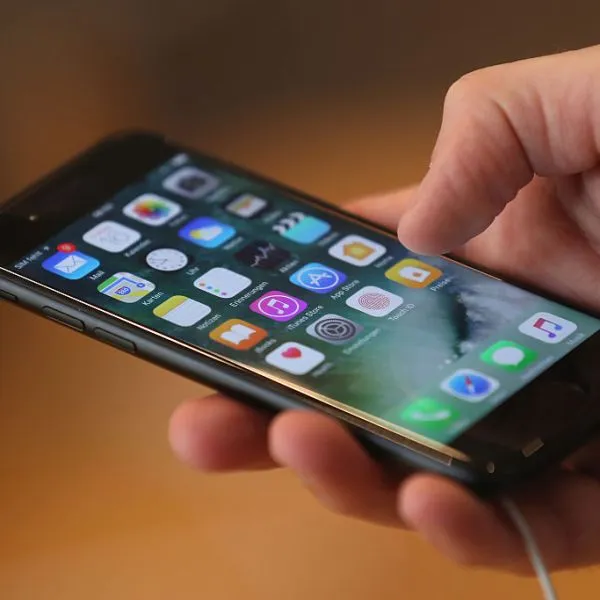

You don’t need to have a visual impairment to be at risk of digital and physical assault when using a smartphone in public. Your risk is that much higher if the smartphone you happen to use is an iPhone. And if you are also blind or visually impaired, your risk goes through the roof and into the stratosphere.
All people with disabilities are at high risk of becoming victims of a crime. That realization causes some members of the blind community to become more insular and less willing to get out by themselves. This, in turn, can rob the visually impaired of social opportunities and cultural experiences. The danger is real and ever present. This is what the experts at Disability Justice had to say:
The United States Department of Justice reports that as many as one out of three girls and one out of five boys, will be sexually abused by the time they’re 18; this rate is even higher among children with disabilities. According to one study, children with disabilities are three times more likely to be abused than their peers without disabilities, while children with intellectual and mental health disabilities have nearly five times the risk of being sexually abused.
When items of value are added to the mix, people with disabilities are at even more of a disadvantage than usual. that is not a problem that can be easily remedied because the nicer hardware also comes with the more accessible software. Many blind people in particular would be unable to carry out necessary functions on the job and in other aspects of their lives without that hardware.
The first step is to be aware of the risks. What follows is a brief description of a few of those risks and some pointers on what you can do about overcoming them:
Situational awarness
Danger is always lurking in the shadows for those who are not situationally aware at all times in public. When one of your senses is unavailable, you have to rely that much more on the others. If you cannot depend on your vision when out and about, it is vital that you don’t also cut off your hearing.
It is not true that people who are blind are compensated with superhuman hearing. At best, they rely on their hearing more and it works out because they have no visual distractions to process. If you are wearing dark glasses and wielding a white cane, you are advertising to the world that you are blind. That is not really the problem. If you top that off by sporting over-ear headphones, you are announcing that you are not paying attention as well. that is when things get dicey.
You might need to hear navigation instructions from your device. But instead of using headphones that obstruct your hearing, try switching to earbuds. Further, don’t put them both in when awareness is required. Wear only one at a time, leaving your hearing available as a tool to help you be more aware of your surroundings.

Part of situational awareness is knowing when to bring out your device and when to leave it in your pocket or purse. As a general rule, don’t ever display your iPhone in public when possible. If you use VoiceOver or some other screen reader, keep the phone in your pocket if your pockets are large enough to accommodate it. Don’t make it easy for someone riding on a bike to do a grab and go. Be smart about when you take your iPhone out in public. And be sure to tuck it away as soon as you can.
Password protection
Never enter a password or passcode in public unless there is simply no other alternative. That goes double if you have a disability. Not every thief is interested in making off with the hardware. they can make more money with access to your various accounts and personal data. The hardware can be a liability. They often only steel the phone to get better access to what it unlocks for them by way of your personal data. Once they have that, they have no more use for the phone.
If they do intend to swipe the phone, they will usually follow a mark until the target pulls out the phone and enters the passcode. Now, they have everything they need to gain access to everything else. Shoulder surfing is a real thing that nefarious people do to great effect. Situational awareness can help you detect when someone is hovering a little too close for a little too long.
Always use biometric unlock on devices that offer the feature. That way, if you have to access your bank account, unlock your device, or interact with some other personal information in public, you can do so without entering a password or passcode. The safest thing to do is wait till you get to some place more private. Otherwise, use methods that don’t require you to manually enter a password.
Stay visible
There is a difference between being independent and being alone. You want to be as independent as possible so that you don’t have to schedule your entire life around when someone else can be with you. At the same time, you also don’t want to be completely alone when out and about. That is just making it too easy for those looking for an easy target. Don’t be an easy target.
When navigating independently, do so in public places where there are other people. Be seen by as many people as possible. That is not the same as being in the middle of a crowd. You are not necessarily being seen by anyone when walking in midtown Manhattan with a million of your closest friends. In such environments, no one sees anyone or anything. Do your public navigating during well-lit times of the day and in well-lit places if you need to be out when the sun is not.
Another part of staying visible is speaking up. Don’t be afraid to pipe up when you need assistance or are feeling out of your element. Ask for help in a strong and confident voice. Forget social conventions. Quietness is not your friend. And if the situation does go sideways and someone makes a move against you, that is not the time for subtlety. Get loud, obnoxious, and bring attention to the situation by any means necessary. That, alone, will be enough to frighten off an attacker most of the time. Always be seen, and when necessary, be heard, loudly.
None of us are ever entirely safe. But there are definitely ways to make sure the odds are ever in our favor. practice situational awareness. Protect your passwords. And stay visible to as many people as possible. Keep those items of value tucked away whenever possible and stay safe.
David Johnson